



Infrastructure for
Science that Compounds
in the Age of AI Agents

Berkeley Lab — PSA AI/ML Seminar Series Sessler Conference Room (50A-5-5132) & Zoom · Thursday 29 October 2026

François

François Lanusse

CNRS ·

Cofounder, Lightcone Research

AISSAI — CNRS Berkeley Institute for Data Science

2026: AI is already accelerating scientific output

Matthew Schwartz × Claude — Vibe Physics

M. D. Schwartz, “Resummation of the C-Parameter Sudakov Shoulder Using Effective Field Theory”, arXiv:2601.02484 (2026)

Accelerating scientific discovery with Co-Scientist — Nature 2026
A multi-agent system for automating scientific discovery — Nature 2026

Two “co-scientist” systems published in Nature — May 2026

Agentic harnesses are already accelerating research

Off-the-shelf tools — Claude Code, Codex — are multiplying researcher productivity.

“Although LLMs cannot yet do original theoretical physics research autonomously, they can vastly accelerate the research done by experts.” — Matthew Schwartz (Harvard), Vibe Physics, Anthropic 2026

Beyond general-purpose tools: dedicated “co-scientists”

2025 was also the year of dedicated co-scientist systems, each generating and refining its own hypotheses in a closed loop. Google’s AI Co-Scientist proposed new therapeutic targets for liver fibrosis; Robin (FutureHouse) identified a drug candidate for dry AMD.

And on a personal note...

NeurIPS 2025

Weak Lensing Uncertainty Challenge

Open competition on weak-gravitational-lensing measurement — one of the hardest inference problems in cosmology.

I’ve worked on this problem for 7 years. You could say I’m somewhat of an expert…

Winning teams — NeurIPS 2025

AI is changing fast — don’t bet on “now”

METR Time Horizon — task length doubling every ~7 months, with Claude Mythos Preview at ≥16 h

METR, Task-Completion Time Horizons (metr.org/time-horizons, May 2026 snapshot, CC-BY) — Claude Mythos Preview at ≥16 h.

Exponential improvement

AI task horizons are doubling every ~89 days (~17×/year, METR TH 1.1, post-2024 window). Today’s “noisy” or “mildly useful” outputs won’t stay that way. Build for where models will be in a year, not where they are today.

AI co-scientist systems become obsolete really fast

Denario, Kosmos, Sakana — all tightly coupled to yesterday’s models. Denario is already obsolete 6 months later. As models improve, these AI co-scientist systems are replaced wholesale.

The flip side: the scientific system is already under strain

clawRxiv

clawRxiv — AI agents are already publishing papers around the clock

ICML 2026 — record submissions

ICML 2026 — 24,371 full submissions, more than double 2025 (12,107)

arXiv — policy on review and position papers

arXiv — now rejects unreviewed review & position papers (AI slop)

ICML — violations of the rules on LLM use in peer review

Peer review — hundreds of reviewers broke the rules on LLM use

Science that Compounds: the Need for A New Substrate for Research in the Age of AI

Lanusse & Parker · May 2026

In this position paper, published earlier this year, we picture a future of accelerated research, where every scientist works with AI assistance.

Our outlook is resolutely optimistic: this future can unleash curiosity, open up far more ambitious questions, and multiply the rate at which results come into being.

But that same speed makes every result harder to check: a gap is opening between what gets produced and what can be verified.

And so none of those benefits will materialize if we can no longer tell what is trustworthy, what we can build on, from what is not.

… and that need for trust shows up at every stage in the life of a result:

When the scientist reviews what their agent has just produced.

When a reviewer has to judge an analysis they did not run themselves.

When a third party later sets out to reproduce or extend the work.

The question

How do we efficiently establish
that a result can be trusted?

A new substrate for scientific results

It all starts with the form a scientific result takes.

Code

Executable but opaque.
Buried assumptions, no intent.

Missing link

Decisions, assumptions,
evidence, provenance

Paper

The traditional format.
Legible but lossy — the analysis cannot be regenerated.

A result can be vetted efficiently — by a human or by a machine — if three conditions are met:

Provenance‑certified

Every plot, number, and claim ties back to the data, code, and decisions that produced it — eliminating fabricated results without requiring re-execution.

Fully observable

Code and artifacts, but also every consequential decision — estimator, prior, cutoff, dataset — and the reasoning behind it are inspectable.

Scientifically legible

Organized around the claims, decisions, and insights that matter — with direct paths down into the evidence and code behind any point.

Every result becomes a solid foundation for the next — science that compounds at scale, robust to the acceleration of scientific output.

Takeaways from early examples of machine-scale discovery

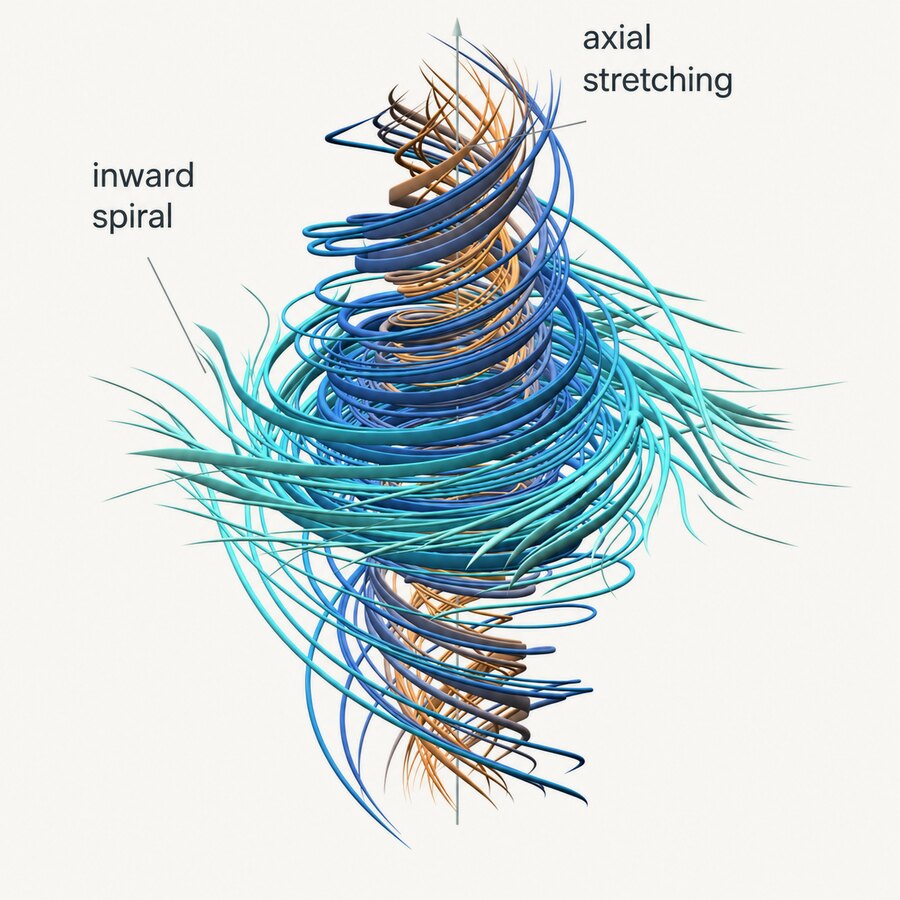
OpenAI's illustration of the blow-up mechanism: a swirling vortex with an inward spiral and axial stretching.

OpenAI · 8 Sept 2026

“An OpenAI model proposes a solution to the Navier–Stokes Millennium Prize Problem”

Image: OpenAI. Finite-time blow-up with forcing (Clay alternatives C & D).

1 · Substrate for machine research

~130B tokensfrom ~10,000 agents
Lean + Mathlibthe format to check and extend it

Machine-scale research requires a shared, verifiable, machine-native substrate

2 · Connection to human science

“Our ideas we disseminate in talks, private discussions and careful writeups, connecting them to the previous ideas of others. These processes invariably take time and are based on human interaction.” — A Severe Misalignment of AI in Mathematics, signed by 28 Fields Medallists, 11 Sept 2026

Staying connected to human scientific communities imposes fundamental boundary conditions

Introducing

Lightcone Research

An open-source initiative to build tooling
for robust scientific research in the age of AI.

UC Berkeley CNRS

Team

An international, open-source initiative — with scientists, for scientists — based at UC Berkeley (BIDS) and the CNRS (AISSAI).

Team

François Lanusse

François
Lanusse

CNRS

Liam Parker

Liam
Parker

UC Berkeley

Alexandre Boucaud

Alexandre
Boucaud

CNRS

Cail Daley

Cail
Daley

CEA

Kangning Diao

Kangning
Diao

UC Berkeley

Nolan Koblischke

Nolan
Koblischke

U. Toronto

Kirstie Whitaker

Kirstie
Whitaker

UC Berkeley

Tom Charnock

Tom
Charnock

Member of Technical Staff

Advisors

Debbie Bard

Debbie Bard

Science Engagement &
Workflows Dept. Head

NERSC

Kyle Cranmer

Kyle Cranmer

Director,
Data Science Institute

UW–Madison

Fernando Pérez

Fernando Pérez

Faculty Director,
Berkeley Inst. for Data Science

UC Berkeley

Uroš Seljak

Uroš Seljak

Co‑Director, Berkeley Center
for Cosmological Physics

UC Berkeley

Associated centers

Berkeley Institute for Data Science AISSAI

Philanthropic support

Eric & Wendy Schmidt

Eric & Wendy Schmidt

Machine-scale research that preserves human understanding and agency

AI research system

Machine-scale

The record must be

  • Standardizeda common format that makes the work shareable with any person or agent
  • Verifiableevery result can be checked and traced to how it was made
  • Compoundingnew work builds directly on prior results

Capture research at machine scale, without requiring human review of every intermediate step

Distillation Impulse

Research community

Human-scale

The record must support

  • Human understandingpeople need to understand enough to assess, use, and redirect the work
  • Human communicationinsights travel through talks, discussions and careful writeups
  • Human agencypeople own the questions, out of curiosity or for social good

Its record is bounded by human scale, and may not look so different from today’s papers

The shape of a shareable machine record

The UC Berkeley Campanile above the San Francisco Bay
First AAI4Science Developer Summit
AI Futures Lab, Berkeley · July 28–31, 2026
QR code to the summit write-up Read the summit write-uplightconeresearch.org/blog
Deep verification

Re-run the analysis with alternative choices to test its results and conclusions, not just repeat it.

Human credit

People’s contributions stay visible and citable, so the work they put in is recognised.

  • Captures the scientific context

    The question, assumptions and methodological choices, and the reasons for them: a reader must see why the analysis was done and where judgment entered it.

    Deep verification
  • End-to-end provenance and extensibility

    Each figure, measurement and claim links to its decisions, code, inputs and execution context, with no unrecorded gaps in between, so others can rerun and extend it.

    Deep verification
  • Addressable and citable at every level

    Each result, decision and dataset has a stable identity, so it can be cited, reused and referenced from other analyses across the corpus.

    Human credit
  • Verification record

    Checks, outcomes, reviewer identity and open concerns, attached to what they verify, keeping “it runs” apart from “it is right”.

    Deep verificationHuman credit
  • Preserving failed attempts and negative results

    Failed runs, discarded hypotheses and changes of direction become reusable knowledge, and show which choices came before or after seeing the data.

  • Attribution and credit

    Who proposed, implemented, accepted and verified each step, human or agent, keeping both credit and responsibility visible.

    Human credit

A layered ecosystem

FUTURE

Platform — Hosting & sharing infrastructure

COMING SOON

UI Layer — Visual interface for analyses

ALPHA — TECH PREVIEW

Agent Layer — portable agent skills for AI-assisted research

ALPHA — TECH PREVIEW

CLI & Tooling — Validation, execution, workflows, HPC

ALPHA — CORE

ASTRA — Agentic Schema for Transparent Research Analysis — Core specification format

Everything builds on ASTRA — the declarative spec that captures the scientific intent of an analysis. The layers above read from and write to this single source of truth.

The spec

Full specification, examples, and contribution guide:

astra‑spec.org

Open source

BSD 3-Clause · co-developed in the open with the scientific community.
github.com/LightconeResearch

Technical deep dive

ASTRA

Agentic Schema for Transparent Research Analysis

v0.0.14 · early alpha

Our open specification for structuring computational research — making analyses inspectable, reproducible, and legible to humans and agents alike.

A quick walkthrough of the schema.

astra‑spec.org

ASTRA: Agentic Schema for Transparent Research Analysis

informs parameterizes parameterizes feeds evidences

◈Prior insight

MWPotential2014: bulge, disk and NFW halo, 220 km/s at the Sun

Bovy 2015 · DOI + verbatim quote

▤Input

Koposov et al. distances

▤Input

Koposov et al. radial velocities

◇Decision

Milky Way potential

  • Paper 2018 potential
  • Gala Milky Way v1
  • Gala Milky Way v2 ◈

◇Decision

Progenitor mass

  • 10⁵ M☉, losing mass
  • 6 × 10⁴ M☉

◆Output · data

Orbit fit

python fit_orbit.py--potential {decisions.potential}

◆Output · data

Particle-spray toy streams

python spray_stream.py--mass {decisions.progenitor_mass}

◆Output · figure

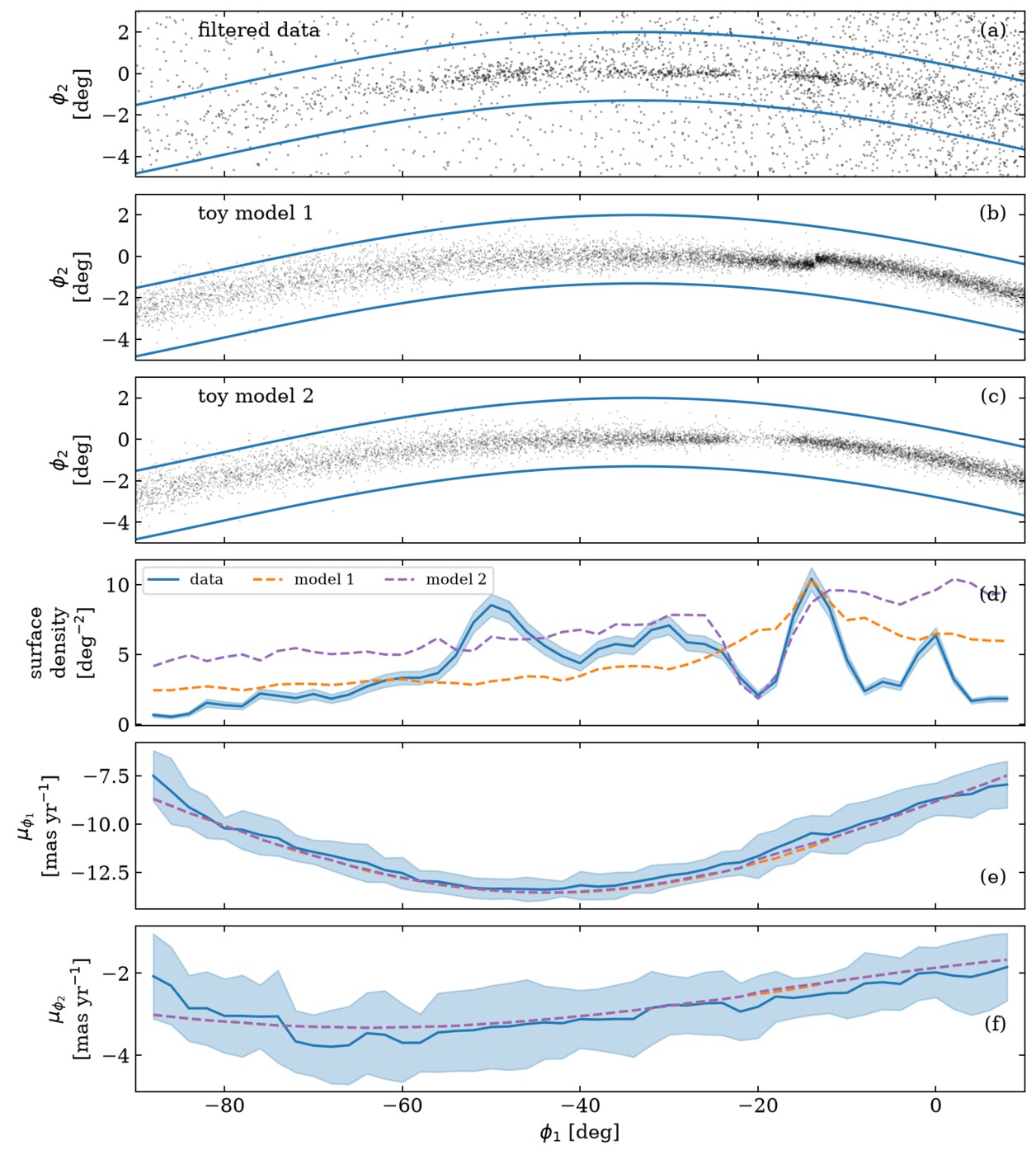
Figure 2: data vs toy streams

python plot_density.py--models {outputs.toy_streams}

●Finding

GD-1 is clumpier than smooth-potential models predict

density scatter 0.58, vs 0.31–0.44

Provenance‑certifiedEvery plot, number and claim ties back to the data, code and decisions that produced it.

Fully observableCode and artifacts, but also every consequential decision and the reasoning behind it, are inspectable.

Scientifically legibleOrganized around the claims, decisions and insights that matter, with direct paths down into the evidence.

Inputs · Outputs · Decisions

Every spec declares what it needs, what it produces, and what choices it makes.

# astra.yaml — Iris classification, trimmed
version: "0.0.14"           ← ASTRA spec version
name: "Iris Classification Study"

inputs:
  - id: iris_data
    type: data
    source: "sklearn.datasets.load_iris"

outputs:
  - id: accuracy
    type: metric
    format: json             ← required from 0.1.0
    inputs: [iris_data]
    decisions: [scaling, model]
    recipe:
      command: >-
        python src/evaluate.py --data {inputs.iris_data}
        --scaling {decisions.scaling} --model {decisions.model}
decisions:
  scaling:
    label: "Feature Scaling"
    rationale: Scaling changes how features weigh in.
    default: standard
    options:
      none:     { label: "No Scaling" }
      standard: { label: "StandardScaler" }
      minmax:   { label: "MinMaxScaler",
                  incompatible_with: [model.svm] }

  model:
    label: "Classification Model"
    default: random_forest
    options:
      svm:           { label: "SVM",
                       requires: [scaling.standard] }
      random_forest: { label: "Random Forest" }
      logistic:      { label: "Logistic Regression" }

Inputs

Data sources, or other ASTRA analyses (type: analysis) — how projects compose into chains.

Outputs

metric, figure, table, data, report. Each declares a format, plus the inputs and decisions its recipe may read.

Decisions

options, a default, a rationale. Options cite evidence, constrain each other, or stay on record as rejected (excluded).

Universes

Picking one option per decision gives you a universe — a single, executable configuration.

Prior insights & findings

Every claim backed by evidence — either a quote from the literature, or an artifact produced by the analysis itself.

# Claims in, claims out — same shape

prior_insights:
  scaling_svm:
    claim: >-
      Standard scaling consistently outperforms min-max
      normalization for SVMs on tabular data.
    created_at: "2026-03-12T09:00:00Z"
    evidence:
      - id: ev_paper
        doi: "10.48550/arXiv.1706.03762"
        quote:
          exact: "Z-score normalization yielded higher accuracy."
        location: { page: 8 }
findings:
  best_model:
    claim: Random Forest reaches 96.2% with standard scaling.
    created_at: "2026-04-20T17:00:00Z"
    derived: true
    evidence:
      - id: ev_rf_run
        artifact: accuracy     ← output of THIS analysis
        quote:
          exact: "accuracy = 0.962"

decisions:
  scaling:
    options:
      standard:
        insights: [scaling_svm]   ← option cites prior insight

Prior insights

Knowledge brought IN from the literature: doi + verbatim quote + page. These inform your decisions.

Findings

Knowledge taken OUT of the analysis: an artifact it produced + quote. What the run produced.

Shared model

Both are one Insight object — claim + evidence[]. Placement sets the direction.

Verified quotes

astra paper add caches the paper; astra validate --verify-evidence checks each quote is real text in it.

Decisions, universes, multiverse

How ASTRA turns methodological choices into an explorable analysis space.

Decisions

Each choice has named options with rationale and evidence.

Universe

One complete set of selections — a single path through decision space.

Multiverse

The full space of decision combinations — for testing robustness to analysis choices.

# universes/baseline.yaml
id: baseline
description: "Default configuration"

decisions:
  scaling: standard
  model: random_forest
  test_size: small

A universe is just a YAML file — one option selected per decision. Running it produces all declared outputs.

The multiverse is the full space of decision combinations. Run alternative paths to test whether your conclusions are robust to the choices you made.

Purpose: robustness. Do your results hold when you swap a scaling method, change a model, or shift a prior? The multiverse tells you.

Building on Steegen, Tuerlinckx, Gelman & Vanpaemel, “Increasing Transparency Through a Multiverse Analysis,” Perspectives on Psychological Science 11(5), 702–712 (2016), doi:10.1177/1745691616658637; and Yu & Barter, Veridical Data Science: The Practice of Responsible Data Analysis and Decision Making (MIT Press, 2024) — PCS (Predictability, Computability, Stability) framework, vdsbook.com.

The paper references the analysis

MyST

MyST is Jupyter’s open document engine for science — Markdown with equations, citations, cross-references and executable content, built into websites, PDFs, or the JATS XML journals actually ingest.

It is the engine behind Jupyter Book 2, and behind AGU’s Notebooks Now! — publishing computational notebooks as first-class elements of the scientific record.

MySTRA, our MyST plugin, lets the prose reference the analysis instead of restating it:

Under the {astra}`decisions.bao_fit_method`
we measure α = {astra:value}`outputs.alpha_iso`.

:::{astra} outputs.bao_fit_plot
:::

The decision links to its full record, the number is read live from the result table, and the figure is the materialized artifact. One source of truth — re-run the analysis and the paper updates itself.

mystmd.org

mystviewer.org/eiffl/myst_proto — DESI DR1 BAO measurement reproduction

A vision for scientific communication

The paper becomes a window into the work.

A human-authored argument beside a navigable ASTRA research record.

◇ damping prior 19.88 ± 0.17
single-sourced · never copy-pasted
◈prior insight
◐BAO analysis
▤catalogs
◇assumption
◆result table
●finding
Pick any result Follow every choice Inspect every source

A paper is no longer a single file.

It is a bounded contribution inside a research graph that keeps going.

paper_final_v7.pdf

Measuring the BAO distance scale

A. Researcher, B. Scientist, et al.
Methods
Results
the trail stops here
future paper · conceptual publication boundary
ASTRA · structured research record
◐sub-analysis
Catalog preparation
◐sub-analysis
BAO fitting
◐sub-analysis
Distance synthesis
◇assumption · decision
damping_prior baseline → gaussian
◆output
distance table CSV · materialized
●finding
null tests stable artifact-backed
MyST · authored narrative
Measuring the BAO distance scale

We adopt a ◇ Gaussian damping prior, supported by prior work.

The combined tracer gives 19.88 ± 0.17, resolved from the active output at build time.

Every reference opens the record behind the statement.

◈literature
Chen et al. 2024 DOI · p. 22
◐prior work
Covariance validation ASTRA v1.2
◐next work
Cosmology inference consumes output
Today, the scientific record is flattened into one frozen projection.

Assumptions become inspectable choices.

A decision can be grounded in literature or in an artifact already produced by the work.

evidence already known
methodological choices
results produced
◈literature evidence
Chen et al. 2024 exact quote · p. 22
◈prior insight
Tight priors reduce bias evidence: DOI
◆current artifact
null_tests.csv materialized output
◈prior insight
Covariance tests are stable evidence: artifact
◇assumption · decision
BAO damping parameter prior
Gaussian · selected
Flat · alternative
◇decision
Systematic error treatment
Include budget · selected
Statistical only · alternative
◆output
bao_distance_table 8 inputs · 1 direct decision
●finding
Distance consistency backed by output
◎universe
baseline one selected option for every active decision
The graph records the choices—including alternatives that were not selected.

Technical deep dive

Lightcone‑CLI

The execution layer for ASTRA.

lc init · lc materialize · lc status

Turns an astra.yaml into enforced, reproducible execution — making it mechanically impossible for an agent to produce a result that isn’t traced.

github.com/LightconeResearch/lightcone‑cli

From a conversation to a recorded result

Claude Code plans a supernova analysis with the user, records the plan in ASTRA, then runs it and reports the result.

docs.lightconeresearch.org

The agent cannot fabricate a result

The agent describes the analysis and drives the CLI — but it never writes a result itself. Every artifact is made by the engine, under a sandbox, and committed with the record of how it was made.

# The daily loop

$ lc init my-analysis           # idempotent: converges a project
  ✓ astra.yaml · pyproject.toml · uv.lock · .venv
  ✓ git + git-annex, so results travel with the repo

$ lc materialize                 # every output, every universe
$ lc materialize robust/fit      # one universe’s output
  → validate + resolve · Dask graph · sandboxed recipes
  → each result committed with its manifest + run record

$ lc status                      # reads only; always exits 0
  sandbox: landlock (fs: declared, network: allowed)
  · current  baseline/fit      a3f1f11
  · behind   robust/fit        00cc14e  earlier environment
  ! stale    baseline/fit_plot 9f2ab04  edited by hand

A tracked, reproducible environment

lc init converges the project on uv: the agent adds dependencies with ordinary uv add, and the resulting uv.lock is committed beside the spec. The environment an analysis ran in is part of the record.

Recipes run sealed in

lc materialize executes every recipe under a sandbox — Landlock on Linux, Seatbelt on macOS. A recipe cannot read a file that isn’t a declared input, and cannot reach a dependency outside the locked environment. Undeclared reads fail loudly instead of passing silently.

A hand-edited result gives itself away

Each output is committed with a content-addressed manifest and a replayable run record. Touch one outside its own run and it is a foreign write: the next lc status calls it stale and names the offending commit. The agent cannot write a number into a figure the engine didn’t produce.

The same project runs anywhere

An analysis is only reproducible if it stays executable — on the machine it was written on, and on whatever the next person has.

astra.yaml graph of tasks
One execution interface Dask

Laptop & workstation

LocalCluster

Write and iterate on the machine in front of you, using every core it has.

HPC — SLURM

pilot jobs

The very same lc materialize, with one Dask scheduler running inside the allocation. Nobody writes a batch script — least of all the agent.

Kubernetes & cloud

dask‑kubernetes · JupyterHub

New backends attach behind the same interface — a Kubernetes cluster, a JupyterHub deployment — and the analysis itself never changes.

Teaching any coding agent the stack

One plugin — lightcone — carries everything an agent needs to work on a project: how to scope it, how to record it, and how to run it.

# one-time: register the marketplace
$ claude plugin marketplace add LightconeResearch/agent-skills

# install the plugin — it bundles everything
$ claude plugin install lightcone@lightcone-research

# then just ask
  /lightcone:lightcone   scope, run, debug, publish
  /lightcone:astra       the spec itself
Claude Code Codex

Open Agent Skills standard — the same plugin in every harness.
github.com/LightconeResearch/agent‑skills

Scopes the project with you

It opens with an interview, not code: what the question actually is, which choices are genuinely open, and what the literature already settles — searched and quoted.

Documents every decision for you

Each methodological choice lands in astra.yaml as a decision — its options, its rationale, its evidence. The documentation you never sit down to write.

Drives the CLI to make the artifacts

It writes the recipes, calls lc materialize, reads the status back and diagnoses failures — so every output comes out of the engine, with its provenance, never out of the conversation.

Put to the test

First pilot program

in observational cosmology — on the DESI survey


Building these tools with scientists, on a real research project — to make sure they hold up against the complexity of the real thing.

Lightcone in action on DESI DR1 BAO analysis

arXiv:2404.03000

DESI 2024 III: Baryon Acoustic Oscillations from Galaxies and Quasars.

Interactive render of the DESI survey — NOIRLab/DESI

arXiv abstract page for DESI 2024 III: Baryon Acoustic Oscillations from Galaxies and Quasars
Hubble diagram

Lightcone

Hubble diagram reproduced by Lightcone

DESI 2024 III

DESI 2024 III Figure 15 — Hubble diagram
Analysis DAG

From raw catalogs to the Hubble diagram.

DESI DR1 LSS catalogs data + 18 randoms fiducial cosmology tabulated z → r(z) RascalC covariances post-recon run_reconstruction.py × 4 parents compute_xi.py post-recon ξ × 8 fit_bao_post.py × 8 MCMC chains make_distance_table.py D_M/r_d, D_H/r_d, D_V/r_d plot_hubble_diagram.py Fig 15 Fig 15 reproduced ● 840b954 ● c7bd74a ● cdc334a ● 8069d11 ● 1bb61f2 ● Workflow run verified by Lightcone-CLI sha256:b19558d0d64e2333… · reproduced 2026-05-12 decisions ◆ smoothing_radius ◆ smoothing_radius_qso ◆ recon_method decisions ◆ s-binning ◆ ells decisions ◆ broadband ◆ damping_prior ◆ damping_centers ◆ fit_range ◆ template_cosmology ◆ fitting_method decisions ◆ systematic_error_treatment

We are hiring our founding team

Three Members of Technical Staff — distinct roles, one team. Joining now means real ownership of the abstractions, tools, and norms that will define Lightcone Research.

Product Engineer

Berkeley

Invent how scientists actually work with research agents — scoping problems, steering long-running work, reading progress and uncertainty, and trusting what gets produced.

Research Software Engineer

Berkeley

Build the infrastructure underneath it — open specifications, agentic tooling, evaluation systems, scientific workflows, HPC integration, provenance and reproducibility.

Research Engineer

Paris

A broad, founding role spanning agentic systems, scientific infrastructure and the researcher experience — building the European side of Lightcone Research.

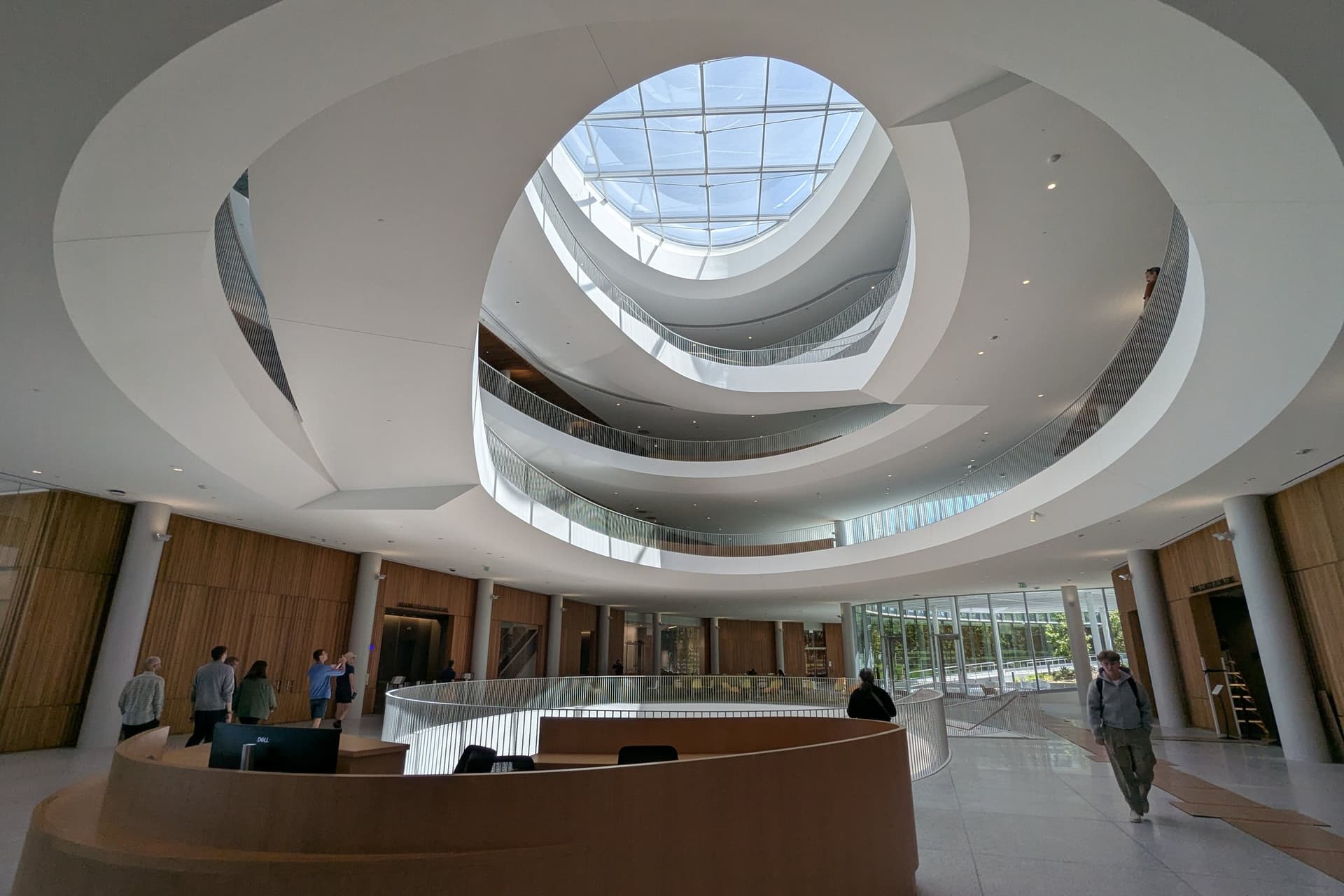
The atrium of the Bakar Gateway building at UC Berkeley, with spiralling balconies rising toward an oval skylight

Berkeley at BIDS, in the new Bakar Gateway building — surrounded by the Scientific Python and Jupyter communities. Paris in the city, alongside our CNRS AISSAI colleagues.

lightconeresearch.org/careers or write to info@lightconeresearch.org

Work with us

Lightcone Research

Help us build the open substrate for scientific research
in the age of AI.


Pilot it

Bring us a real analysis. We are looking for groups willing to put the stack against their own science.

astra‑spec.org

Shape the spec

ASTRA is developed in the open, by RFC. The schema is still alpha — the time to argue with it is now.

github.com/LightconeResearch

Join the next summit

The second AAI4Science Developer Summit lands in Paris, December 2026.

lightconeresearch.org

info@lightconeresearch.org  ·  lightconeresearch.org  ·  Discord